Fonts and Communication
Fonts are the designs of letters. Different fonts give different impressions. When I was a high school student,/I became interested in them.
Look at the menus/of two pancake shops. Both menus show the same pancakes. For some people,/Shop A’s menu looks pretty and casual. They may think,/“This shop is good/for lunch with my friends.” For others,/Shop B’s menu looks stylish and fancy. They may think,/“This shop serves expensive pancakes. I should come here/for a special event.”
When we see the same information/in different fonts,/our impression of it/changes. Fonts play an important role/in communication.
Here are two typical English fonts:/
(1) Hello, everyone. (Times New Roman)
(2) Hello, everyone. (Century Gothic)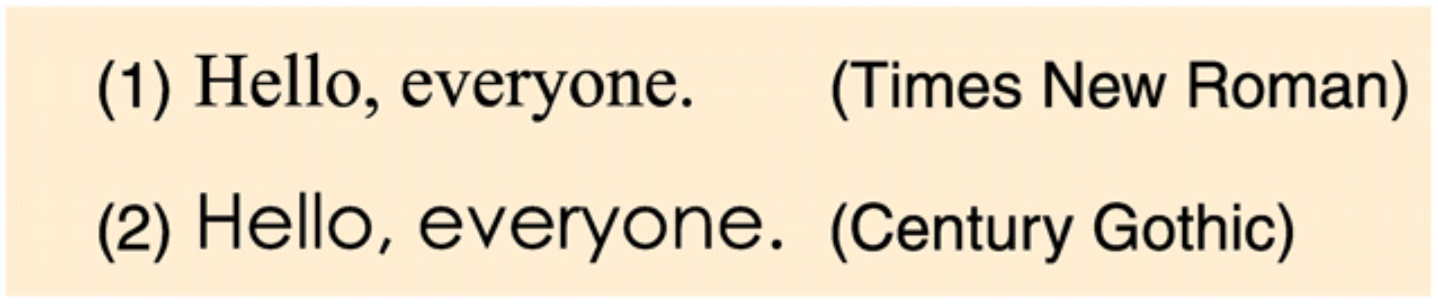
The first font is popular. A British company made the font/for its newspaper,/The Times ,/in 1932. People can read it/quickly and easily. Today,/a lot of people use the font/in many documents. The second font is not so old. An American company made this font/in 1990. The company created it/for signboards and advertisements. The font is famous/for its round shape. The “e” and the “o”/are good examples.
There are many other fonts/in the world. People make each font/for a specific purpose. Even today,/people are creating new fonts.
When we make slides for presentations,/we often choose our favorite fonts. However,/we have to think of our audience. Some people may have difficulty/reading the text. For those people,/some companies created different kinds/of accessible fonts,/or “UD fonts.” They believe/that UD fonts are helpful.
Have a look at one/of the UD fonts:/
Hello, everyone.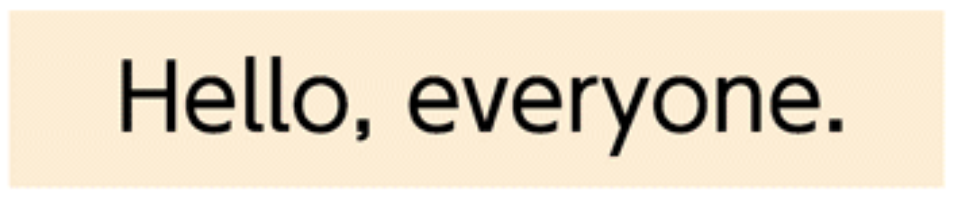
The words look large and clear. Today,/we can see UD fonts/on traffic signs,/in instructions for medicines,/and so on.
When you choose fonts,/think of your readers. Every person has a right/to accurate information.
Fonts are the designs of letters. Different fonts give different impressions. When I was a high school student,/I became interested in them.
Look at the menus/of two pancake shops. Both menus show the same pancakes. For some people,/Shop A’s menu looks pretty and casual. They may think,/“This shop is good/for lunch with my friends.” For others,/Shop B’s menu looks stylish and fancy. They may think,/“This shop serves expensive pancakes. I should come here/for a special event.”
When we see the same information/in different fonts,/our impression of it/changes. Fonts play an important role/in communication.
Here are two typical English fonts:/
(1) Hello, everyone. (Times New Roman)
(2) Hello, everyone. (Century Gothic)
The first font is popular. A British company made the font/for its newspaper,/The Times ,/in 1932. People can read it/quickly and easily. Today,/a lot of people use the font/in many documents. The second font is not so old. An American company made this font/in 1990. The company created it/for signboards and advertisements. The font is famous/for its round shape. The “e” and the “o”/are good examples.
There are many other fonts/in the world. People make each font/for a specific purpose. Even today,/people are creating new fonts.
When we make slides for presentations,/we often choose our favorite fonts. However,/we have to think of our audience. Some people may have difficulty/reading the text. For those people,/some companies created different kinds/of accessible fonts,/or “UD fonts.” They believe/that UD fonts are helpful.
Have a look at one/of the UD fonts:/
Hello, everyone.
The words look large and clear. Today,/we can see UD fonts/on traffic signs,/in instructions for medicines,/and so on.
When you choose fonts,/think of your readers. Every person has a right/to accurate information.